Tezos Records Over 500,000 NFT Sales as Art Ecosystem Expands in 2025
Tezos recorded over 500,000 NFT sales in 2025, driven by museum partnerships, global art events, artist onboarding, and institutional engagement.
While much of the NFT market struggled in 2025, the Tezos art ecosystem delivered one of its strongest years to date. More than 500,000 NFTs were sold as museums, artists, and institutions continued to build on Tezos.
Key Takeaways
Over 500,000 NFTs were sold across the Tezos art ecosystem in 2025
Museum partnerships introduced blockchain art to more than 243,000 visitors
Global art events reinforced Tezos’ cultural credibility
Education programs focused on long-term artist onboarding
Institutional acquisitions and artist sales signaled resilience
Museum Partnerships Anchored Institutional Adoption
More than 243,000 visitors encountered blockchain-based art through the expanded partnership between the Tezos Foundation and the Museum of the Moving Image (MoMI). Since the first exhibition launched in June 2024, MoMI’s Herbert S. Schlosser Media Wall has served as a visible entry point for on-chain artwork.
In 2025, the collaboration expanded into a year-long program commissioning 12 artists. Each artist used FA2 smart contracts as part of their creative process. MoMI also introduced a free minting station, allowing visitors to create wallets and mint NFTs for the first time.
The partnership also launched the FA2 Fellowship to support artists and developers working with Tezos smart contracts. Designed as both an educational and practical initiative, the Fellowship provides structured training on FA2 contracts to integrate blockchain fluency into artistic workflows. The program runs through January 2027.

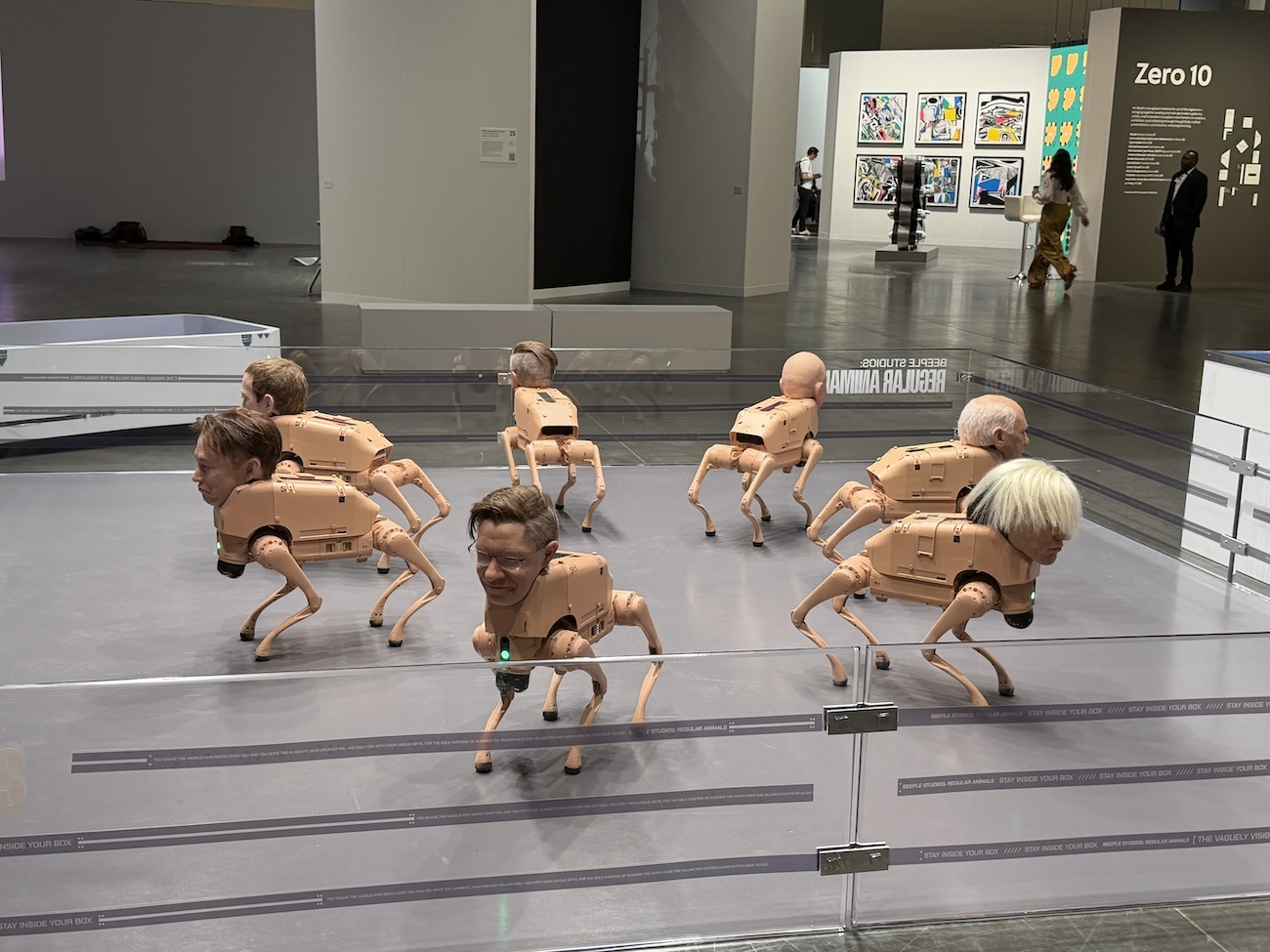
"Contingent" by James Bloom and Gottfried Jäger.
Global Art Events Strengthened Cultural Presence
Art on Tezos maintained a strong presence at major international art events. At NFT Paris, digital art pioneer Kiki Picasso performed a live demonstration using an original 1980s Quantel Paintbox, a historic tool used in early digital art and the MTV logo.
The “Paintboxed – Tezos World Tour” extended that moment across New York, Miami, Paris, and Basel during Art Basel. Thousands experienced digital art history alongside contemporary blockchain-native works.
The largest activation was Art on Tezos Berlin, a three-day festival that drew over 700 international attendees. The event wove together the legacy of generative art with cutting-edge innovation in AI and interactive formats, bridging traditional creative disciplines with emerging technologies.
These global activations also served as powerful onboarding moments. Tens of thousands of visitors engaged with Tezos-powered exhibitions, many of whom minted their first digital artwork through hands-on experiences.
At Paris Photo, Artverse curated a booth featuring Niceaunties, Grant Yun, Reuben Wu, Shavonne Wong, Emi Kusano, and Genesis Kai. Several released work on Tezos for the first time, with sales handled via objkt one.
Education and Sales Marked Market Resilience
Education remained a core focus, acting as a bridge between emerging creators and blockchain tools. In August, the Tezos Foundation partnered with the Processing Foundation to produce a global tutorial series for p5.js 2.0, expanding access to creative coding education.
Institutional confidence was reflected in several sales and acquisitions. The Francisco Carolinum acquired TeleNFT works first shown at Art on Tezos Berlin.
Artist qubibi’s hello world, a live-coded generative work created and manipulated in real time through code, sold for 62,000 tez—highlighting how new forms of procedural creativity are gaining collector interest. Earlier, Mario Klingemann’s AI-generated music video Triggernometry sold for 43,000 tez during the Digital Art Mile.
As 2025 closes, Tezos stands out for delivering measurable progress during a difficult year for NFTs—anchored not in speculation, but in education, institutional engagement, and pioneering artistic expression.